Beyond Energy: Preserving Life Beneath the Surface
Protecting the White-Bellied Pangolin: Where Surveillance Meets Stewardship
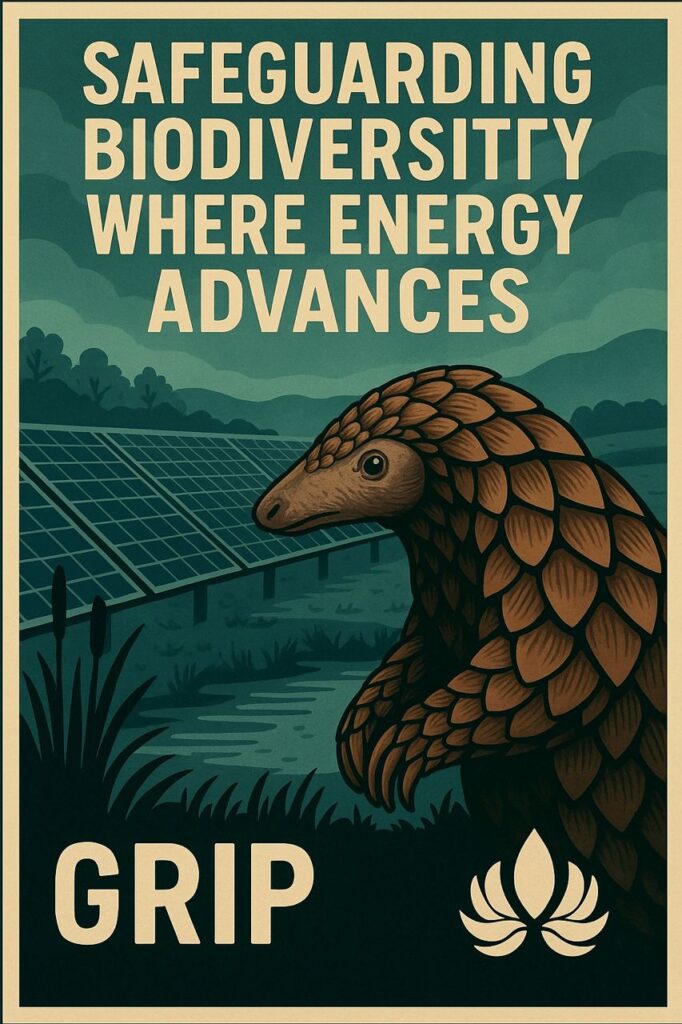
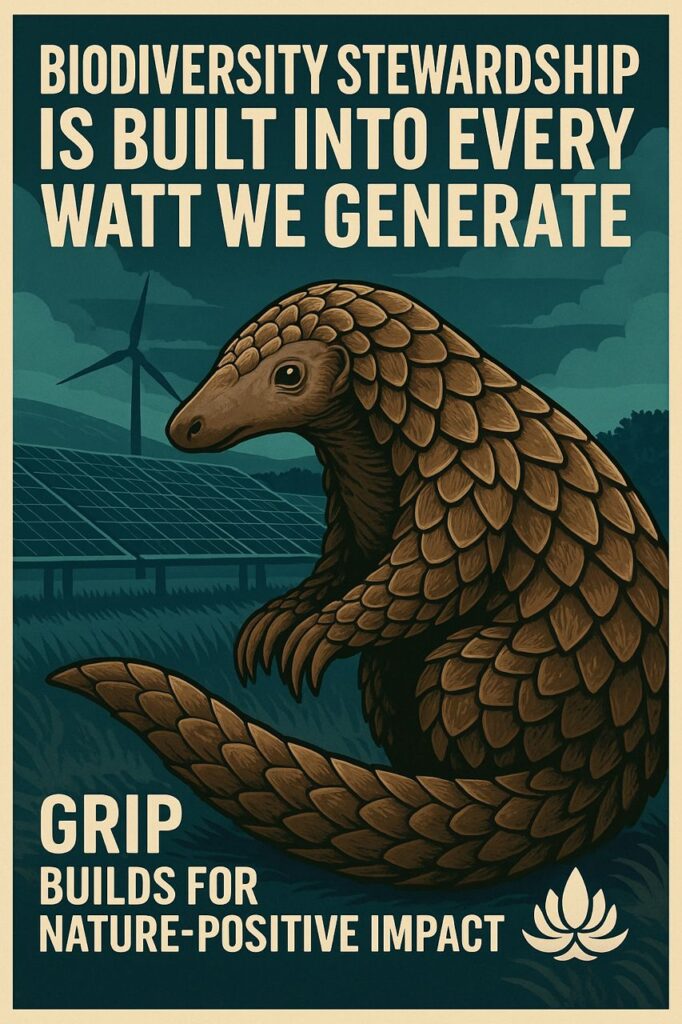
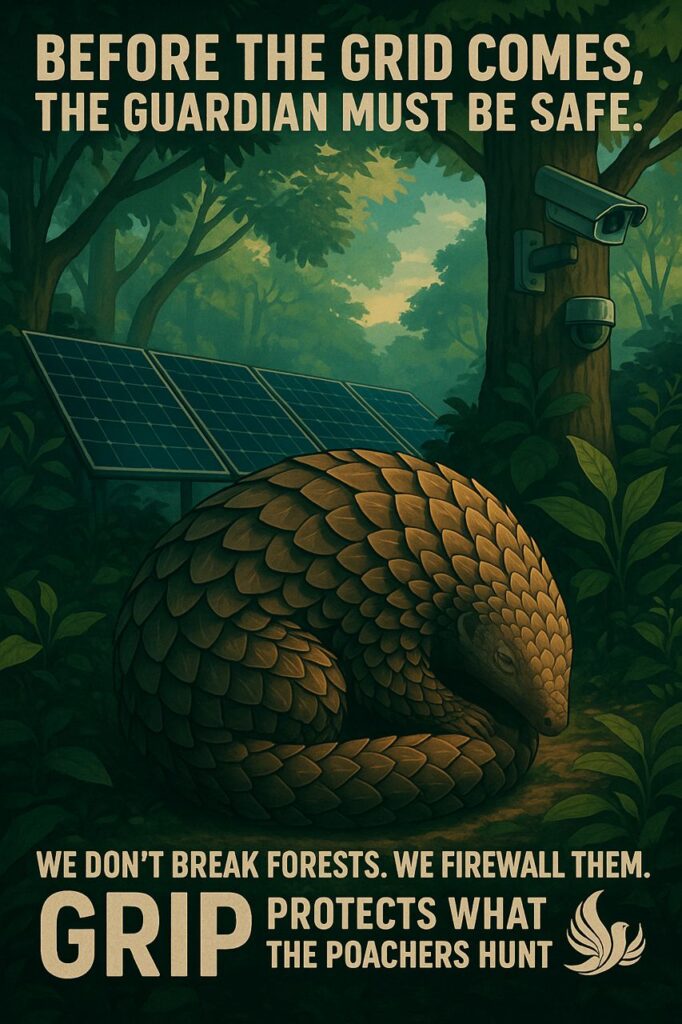
At Grid Resilient Infrastructure Projects PLC (GRIP), we believe infrastructure must not only illuminate cities — it must illuminate our responsibilities. In an era of mass extinction and climate disruption, true power lies in preservation. That is why the White-bellied pangolin — a critically endangered, nocturnal mammal whose scales have become tragically more valuable than its life — stands as a guardian of our Environmental, Social, and Governance (ESG) blueprint.
Often trafficked in silence and lost in shadows, the pangolin is not just an ecological wonder — it is a symbol of what’s at stake when development ignores biodiversity. Its survival is entwined with the health of West Africa’s forest corridors, the integrity of local food webs, and the credibility of national conservation efforts. GRIP has chosen to anchor its forest-zone ESG strategy around this elusive sentinel — because protecting pangolins is protecting the very boundaries of sustainable infrastructure.
Sensitive Content
Sensitive Content
Sensitive Content
Sensitive Content
Sensitive Content
Sensitive Content
Sensitive Content
Sensitive Content
From Symbol to System: ESG Embedded in the Forest Floor
In partnership with the Nigerian Conservation Foundation (NCF) and regional wildlife authorities, GRIP is implementing a cutting-edge Pangolin Habitat Surveillance Program.
This initiative will support:
Forest Corridor Monitoring using AI-enabled camera traps and motion-activated sensors to detect pangolin presence across project zones.
No-Go Conservation Buffers within forest-adjacent infrastructure sites, with protocols triggered by habitat mapping and sighting data.
Species Recovery Credits based on verified pangolin re-sightings and ecological resilience improvements — with valuation methodologies aligned to IFC Performance Standard 6 and IUCN Red List guidance.
Our biodiversity monitoring network will also be synchronized with data-sharing platforms used by TRAFFIC, CITES, and local conservation intelligence networks to ensure pangolin detection triggers real-time intervention where necessary.
Trafficking Meets Transparency: ESG Integrity by Design
GRIP’s ESG platform integrates biodiversity protection directly into energy asset lifecycles — ensuring not only emissions reduction, but ecosystem enforcement. For pangolin-linked zones, our framework enables:
Emissions avoidance from renewable energy generation, alongside
Biodiversity-linked valuation from active species surveillance, deterrence of poaching, and confirmed pangolin habitat presence.
We are currently structuring a pilot pangolin credit methodology — working to align our surveillance-based verification model with the IUCN Wildlife Credits framework and forthcoming TNFD-aligned disclosure standards. By 2026, we aim to issue the region’s first pangolin-indexed biodiversity credit.
Why This Matters
This isn’t ESG theatre — this is biodiversity enforcement baked into our infrastructure DNA. Pangolins aren’t passive icons. They are the encrypted biometrics of forest integrity. They are the test.
At GRIP, protecting pangolins is not charity. It is surveillance. It is compliance. It is reputation risk converted into natural capital.
We’re not just building solar corridors. We’re embedding wildlife protection into the code of our energy systems.
We scan the unseen. We shield the hunted. We code the wild into every watt.
Advancing the Global Agenda: Our SDG Alignment
This program reflects our belief that sustainable infrastructure must include the protection of natural ecosystems. Through this effort, GRIP actively supports the following UN Sustainable Development Goals
Protecting biodiversity is not an option—it’s a responsibility. And the West African manatee is our call to action.